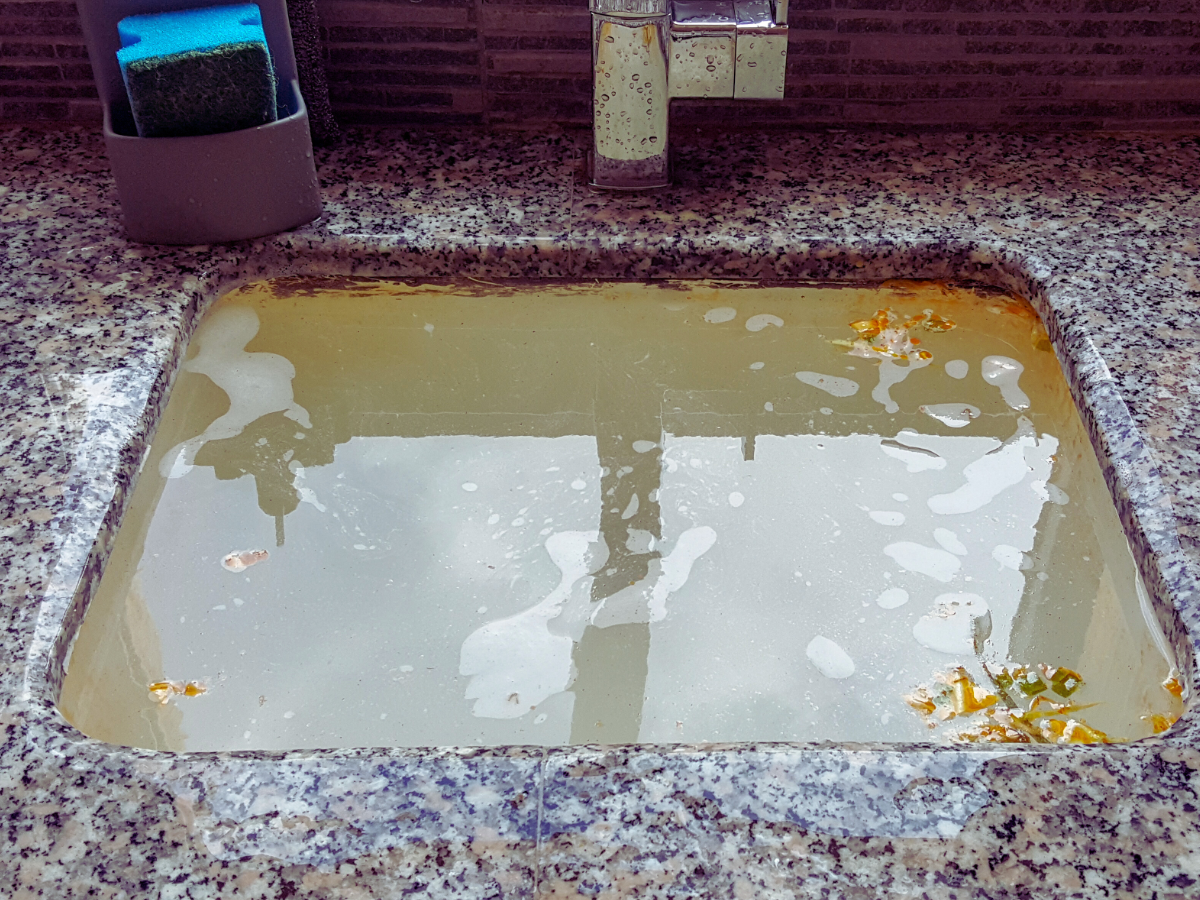
 When you’re just trying to rinse shampoo out of your hair in the morning, having inches of water at your feet is annoying. Besides being inconvenient, slow drains may also indicate an underlying problem.
From grease accumulation to venting problems, there are a few frequent issues that can lead to slow drains.
Quick Takeaways
- Slow drains are often caused by clogs or venting problems.
- Multiple slow drains at the same time indicate a major underlying problem.
- You can troubleshoot by plumbing, cleaning the P-trap, or removing clogs with a drain snake.
- For more complicated issues, call a professional.
How Drains Work and Why They Slow Down Over Time
First, let’s look at how drains work. P-traps hold a small amount of water so that sewer gases can’t emerge. From this location, water flows into the branch pipe and the main sewer line. The plumbing vent system runs parallel to this system and connects to the roof, which allows it to regulate pressure in your pipes.
Blockages are likely to occur at a more frequent incidence in areas where water changes direction, such as in bends in the pipes. In addition, the hard water in Orlando can cause scaling, mineral buildup, and clogs.
The Most Common Causes of Slow Drains
So, why do drains clog? There are a few frequent causes of slow drains.
1. Hair and Soap Scum Buildup
One of the most common drain clog reasons is hair and soap residue in P-traps.
2. Grease and Food Waste
Grease, oil and fat harden as they cool off, increasing the likelihood of clogs in your pipes. When combined with food scraps and starches, this problem can quickly become worse.
3. Clogged or Dirty P-Trap
While the P-trap often traps debris, it can be easily removed and cleaned.
4. Blocked Plumbing Vent
When vents are clogged, it changes the air pressure and reduces the drainage speed within your pipes. You may notice gurgling noises or have slow drains at multiple fixtures.
5. Hard Water Mineral Deposits
The magnesium and calcium in our hard water cause scaling and greatly limit the diameter of the pipes.
6. Foreign Objects
Any foreign object dropped in the drain can cause a blockage.
7. Main Sewer Line Blockages
Tree roots, grease buildup, and collapsing pipes can cause a sewer line issue that impacts multiple fixtures at the same time.
DIY Fixes for a Slow Drain
 While some problems require an expert, you can learn how to fix a slow drain with a few home remedies for slow drains.
Step 1: Remove and Clean the Stopper or Strainer
For DIY drain unclogging, start by removing the stopper or strainer and cleaning out anything in it.
Step 2: Flush the Drain With Hot Water
With hot water, you can dissolve the grease buildup. Vinegar and baking soda can help clean out debris and buildup in your pipes.
Step 3: Plunge It
Cover your overflow hole in order to create a tight seal before you plunge the drain.
Step 4: Clean the P-Trap
To clean the P-trap, put a bucket underneath. Then, you can unscrew the connections and get rid of any debris inside of the P-trap.
Step 5: Use a Drain Snake
Use a drain snake or auger to remove clogs. Then, flush the drain with hot water.
When It’s Time To Call a Professional Plumber
You should opt for professional help in the following situations.
- Your slow drain won’t clear and frequently returns.
- Multiple fixtures drain slowly, indicating a main line malfunction.
- There are sewer line cracks or root intrusion.
- You noticed sewage odors, overflowing water, and gurgling noises.
By remembering these tips, you’ll know when to call a plumber. With professional drain cleaning, you can get a video camera inspection and state-of-the-art hydro-jetting.
Professional Solutions for Stubborn Slow Drains
Once you contact us for drain cleaning in Orlando, you can enjoy professional plumbing solutions and reliable results. From hydro-jetting services to camera inspections, we can help with all of your plumbing-related issues. Plus, our trusted team members can help with drain snaking and pipe descaling.
How To Prevent Slow Drains in the Future
To prevent drain clogs, never pour grease or oil down your drains. You should also install sink strainers and schedule drain maintenance once per year. As a part of our plumbing tips in Orlando, FL, we recommend flushing drains with mild detergent and hot water each month.
FAQs: Slow Drains Explained
 Over time, we’ve heard a few oft-asked plumbing questions. The following are some of the top slow-drain FAQs.
Why does my drain slow down when it isn’t clogged?
Sometimes, buildup in your pipes can slow down the flow of water without clogging it completely.
Can hard water cause slow drains?
Hard water causes mineral scaling, which can narrow the inside of your pipes over time.
Is it safe to use chemical drain cleaners?
When it comes to drain maintenance tips, we recommend never using chemical drain cleaners. Besides harming the environment, they can corrode your pipes.
What’s the best way to prevent slow drains from happening?
To avoid slow drains, never pour grease or fat down your drains. Also, don’t let hair and soap scum build up. We also recommend scheduling routine drain maintenance to keep your pipes flowing smoothly.
Why are all of my sinks draining slowly at the same time?
This is normally an indication that there is a blockage in your sewer line or vent stack. Because of the location, you’ll need to call for a professional drain cleaning.
Fix Your Home’s Slow Drain Through Professional Plumbing Help
At Benjamin Franklin Plumbing, we are known as the punctual plumbers. When you need help, we immediately come out to your home to find a fast, reliable solution. If you’re struggling with slow drainage, give us a call today!